Tartar: an invisible threat to dental health
The most common reason for visiting a dentist is acute pain caused by caries . Many people ignore various symptoms that inevitably lead to this pain: bleeding gums, plaque, and tartar. Such deviations don’t cause serious concern, and therefore there is no motivation to take preventive measures — which is a big mistake.
Even with hygiene (toothbrush, toothpaste, rinse), plaque forms in hard-to-reach places, which eventually hardens. It is this condition that is referred to as tartar. The problem goes far beyond aesthetics: the multitude of bacteria contained in tartar negatively affects the enamel. And the calculus itself grows, affecting more and more healthy tissue.
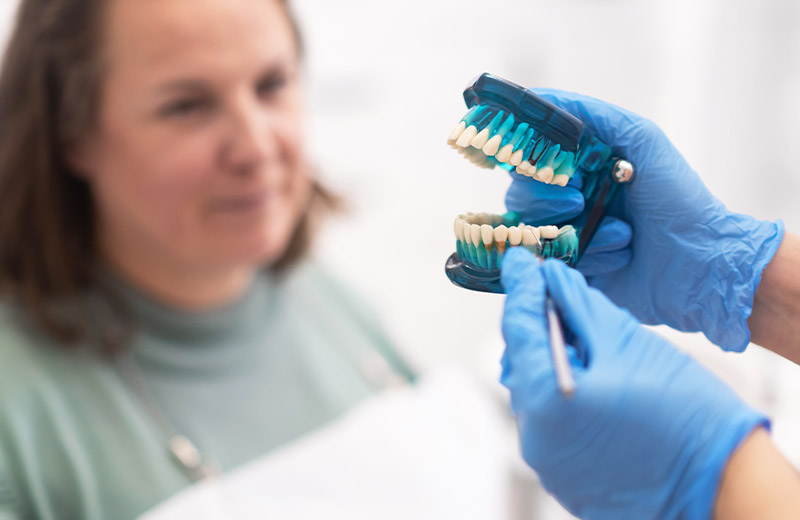
Dental plaque and tartar: how to recognize them and avoid serious oral diseases
Plaque is very easy to diagnose on its own: it can be clearly felt by running the tongue over the surface of the teeth. Tartar is also visible, having the appearance of darkening at the root part, in the fissures. In advanced cases, symptoms may include bleeding gums and bad breath. If tartar is not removed in time, there’s a high risk of developing the following oral diseases:
- root caries;
- gingivitis – inflammation of the gingival mucosa;
- periodontitis – inflammation of the periodontium;
- marginal periodontitis – inflammation of the periodontium with cyst or granuloma formation;
- tooth loss.
Professional oral hygiene: why is home care not enough?
Daily home care aims to remove plaque, food particles, and bacteria using a toothbrush, dental floss, toothpaste or powder, and mouthwash. However, even with the most thorough cleaning, bacteria and plaque remain in hard-to-reach areas, eventually becoming tartar. Dentists recommend professional cleaning at least once every six months, and quarterly for people with implants or dentures.