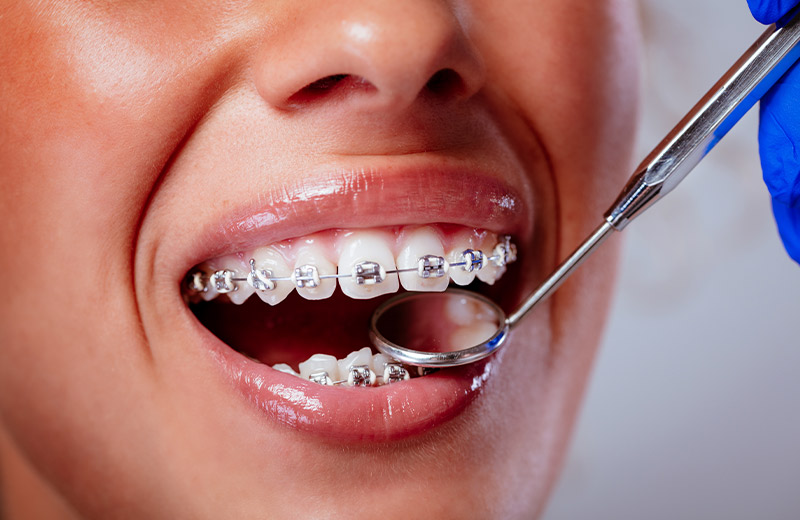
Bracket systems: Bite correction and smile improvement
Bracket systems are used to correct problems associated with malocclusion and irregularities in the dentition. These devices help to improve the aesthetic appearance of the smile and help to solve all kinds of dental problems. The process of correcting teeth can take quite a long time – from several months to several years, but the final result is worth the effort, because the patient gets not only straight teeth, but also a healthy mouth. This treatment not only makes the smile more attractive, but also helps to eliminate chewing difficulties, preventing future dental problems.
Braces can correct a variety of dental problems, including crowded teeth, crossbites, or teeth that are too far apart. If you have diverted teeth or teeth that are rotated around their axis, you should see an orthodontist for an examination. Most often, the first visit requires a panoramic x-ray or CT scan, which will help the specialist assess the full picture of your teeth. The doctor will perform an examination, listen to your complaints and suggest various treatment options along with previous estimates.
Types of bracket systems
Modern orthodontics offers a wide range of braces, each with its own advantages and unique features.
- Ligature braces are a classic model in which the arch is attached to the teeth with special elastic bands (ligatures). This system provides reliable correction of the bite, although it requires regular visits to the doctor.
- Self-ligating braces are modern models that use mechanisms to fix the arch, which makes it easier to care for the system and reduces the number of visits to the orthodontist. They are more comfortable for patients.
- Lingual braces – fixed on the inside of the teeth, on the side of the tongue and remain completely invisible to others. They are popular among those who want to undergo treatment without changing their appearance.
- Partial braces (2×4 appliance) – commonly used in children to correct the alignment of front teeth. The system includes two molars and four incisors (total of six teeth).
Depending on the materials, there are **metal**, **ceramic**, and **sapphire** braces.
Metal systems are the classic option. They are not attractive, but they have two big advantages: reliability and affordability.
Ceramic systems are almost the same color as tooth enamel, making them less noticeable.
Sapphire braces are made of a clear material that provides an aesthetic look.
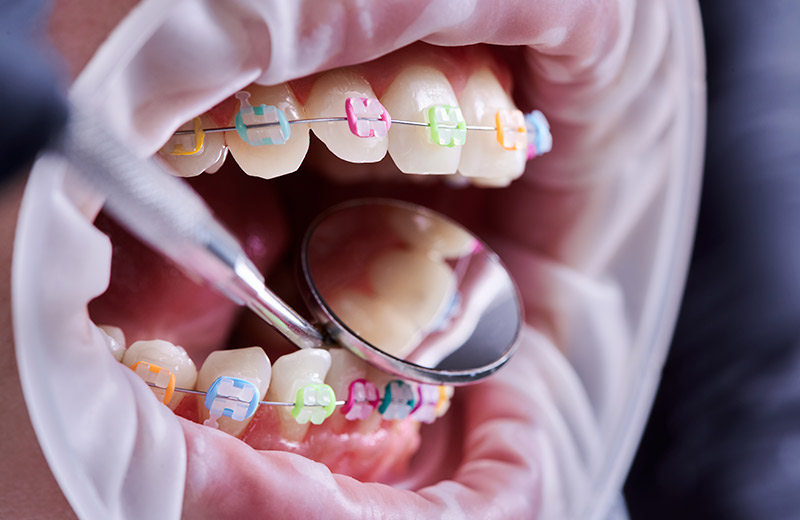
Colorful braces for a bright smile
Some patients, especially children and teens, choose colored braces to add personality during treatment. Color systems include:
- Ligature colored braces, where the elastic bands to secure the arch are available in different colors that can be changed at each scheduled doctor’s visit.
- Self-ligating colored braces, where the brackets are brightly colored, which adds originality to the smile during treatment.
Microimplants: accelerating orthodontic treatment
Some cases of correction utilize micro-implants, which are small screws that are temporarily inserted into the jawbone to enhance the result. The procedure is quick, painless, and wearing them does not create significant discomfort. These implants can speed up the process of moving teeth and shorten the treatment time.
Lingual braces: a hidden system
Lingual braces are ideal for those who want to keep their smile natural during treatment. They are fixed on the inner surface of the teeth, making them invisible to others. These systems are comfortable, but may take a little longer to adjust due to possible diction problems at the beginning of treatment.
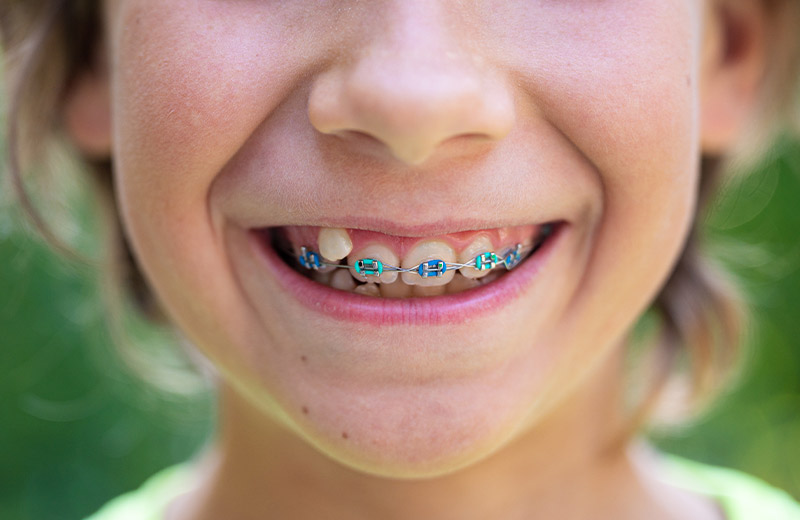
Children's braces: the right time for treatment
Children should be fitted with braces between the ages of 11 and 14, when most permanent teeth have erupted and the jaw is still malleable enough to correct the bite. However, the orthodontist may recommend starting treatment earlier if it is necessary to align the position of baby teeth.
Completing treatment: splints and retainers
Once the braces are removed, it is important to fix the result so that the teeth remain in the correct position. For this purpose, it is used:
- Splints – special wires that are fixed to the back of the teeth for
long-term stabilization. - Retainers – clear removable mouthguards that are worn according to the doctor’s recommendations.
In some cases, a combination of both methods is used to achieve the best results.
Professionalism at Sapphire Dental Clinic
Sapphire Dental Clinic employs specialists with extensive experience, which guarantees an individualized approach to each patient. The orthodontists at the clinic have many years of practice in working with both children and adults, ensuring effective and comfortable treatment. Thanks to modern equipment and the latest technologies, the clinic achieves the best results in bite correction.
Sapphire Dental Clinic provides patients with modern braces and high level of service, offering individual solutions for each case and full control over the course of treatment.